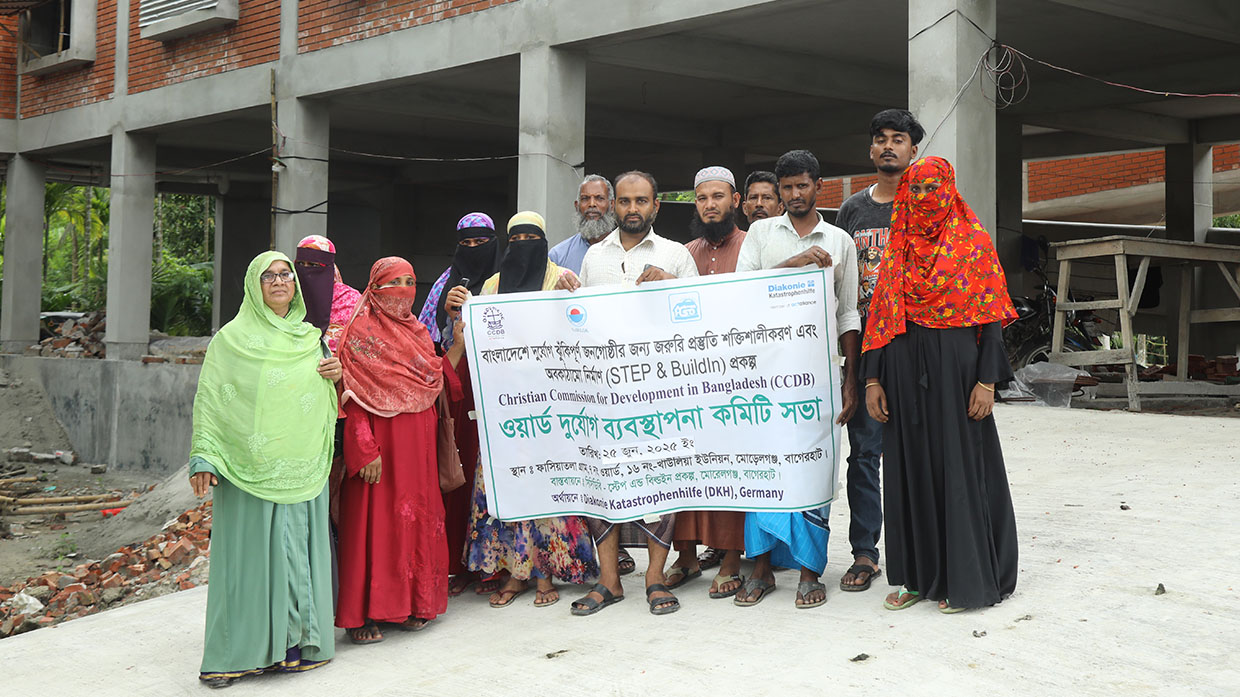
The “STEP & BuildIn” project, spanning from December 2021 to November 2024, is a collaboration between CCDB, ASD, and Nabolok, funded by Diakonie Katastrophenhilfe (DKH), with CCDB leading the consortium.
It aims to improve the lives and livelihoods of climate and disaster-vulnerable communities in Bangladesh.
Project objectives:
- strengthening the knowledge, response, and recovery capacity of different stakeholders
- reducing the disaster risk through improving the physical structure and providing improved adaptive services to the community
- Reduce the vulnerability of the community people through providing improved and alternative livelihoods.
Operating in 31 villages across districts like Satkhira, Bagherhat, Khulna, and Sunamgonj, the project targets around 6,555 households directly (CCDB: 2,575, Nabolok: 2,000, ASD: 1,980), benefiting approximately 30,000 individuals. An additional 9,500 households indirectly benefit, covering about 42,000 people. Over 50% of direct beneficiaries are women, aged 20 to 60. Focused on disaster-prone coastal and Haor regions, the project addresses hazards like cyclones, floods, erosion, etc., with a three-year strategy involving physical, technical, technological, social, and institutional interventions.
Intending to improve the disaster knowledge and strengthen the DRR capacity of various stakeholders, the project’s implementing partners (CCDB, Nabolok, and ASD) successfully carried out different activities during this reporting period. Among the accomplishments are as follows:
Disaster related awareness building:
Throughout the year of 2023 project arranged 758 court yard session, facilitated 310 local disaster management committee meetings, facilitate to development of 2 local contingency plan, organized 47 batch capacity building training for the local DM committee members ( UDMC, WDMC and ERT), provide many rescue materials to local DM committees, arranged seven mock drills at community level, Celebrate different National and Disaster/Environment related days and participate in GoB fair and organized 11 pot song and street drama at different implementation locations of coastal and Haor regions across four districts in Bangladesh.
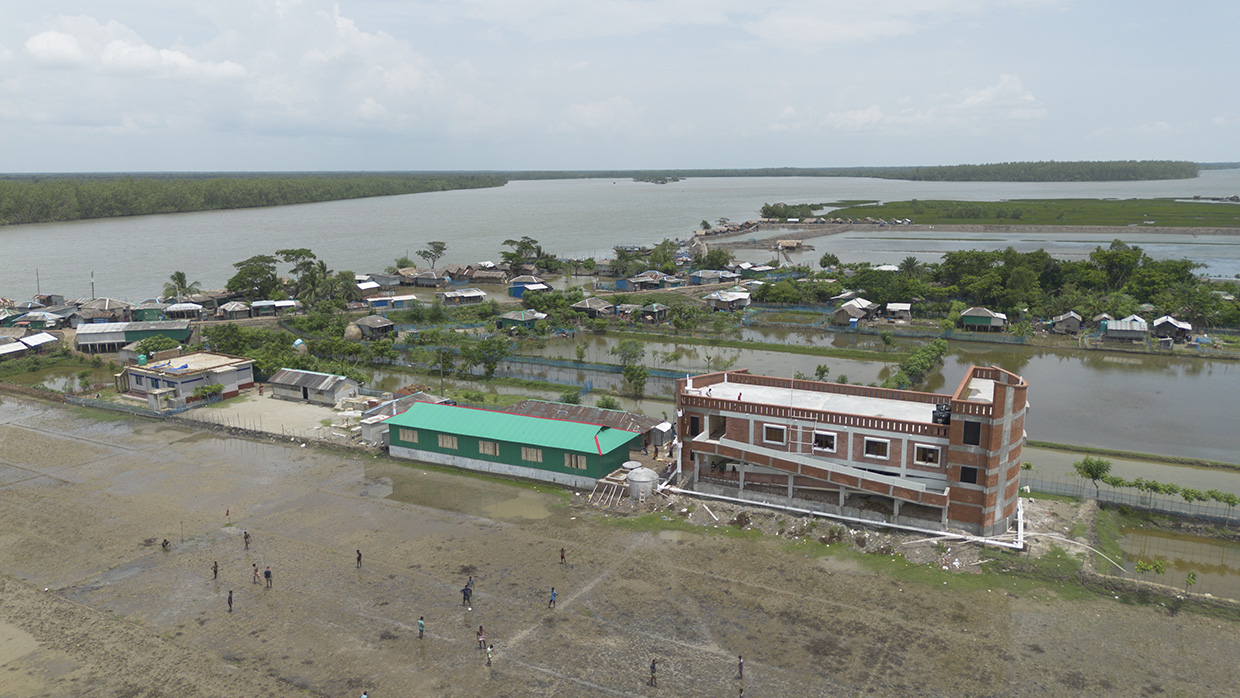
Mitigate disaster risk through improved infrastructure and adaptive services: Last year, the project equipped two evacuation centers in the harbor area and planted several trees at embankments/ roads in different implementation locations. Besides, the project responded to Cyclone Mocha in the Morrelganj Bagerhat area. CCDB Morrelganj team undertook several initiatives, including regularly sharing Cyclone Mocha updates with the project office in Dhaka, attendance at Upazila Disaster Management committee meetings, preparation of five cyclone shelters, purchase of emergency rescue materials for disseminating cyclone updates to the community, and close collaboration with relevant government departments and local disaster management committees.
Enhancing community resilience by providing alternative livelihood options: During the reporting period, the project facilitated skill development training to 372 beneficiaries, aimed at improving the knowledge and skills of project beneficiaries. Additionally, tailored AIGA support was provided to these beneficiaries based on their skills, abilities, and interests. Furthermore, the project organized DRR and climate-adaptive agricultural training sessions for the 284 targeted beneficiaries, complemented by supporting necessary agricultural inputs. Technical experts from pertinent government departments actively facilitated these training sessions, ensuring comprehensive support and guidance. Moreover, 25 targeted beneficiaries received business entrepreneurship training during this reporting period.
Significant construction activities:
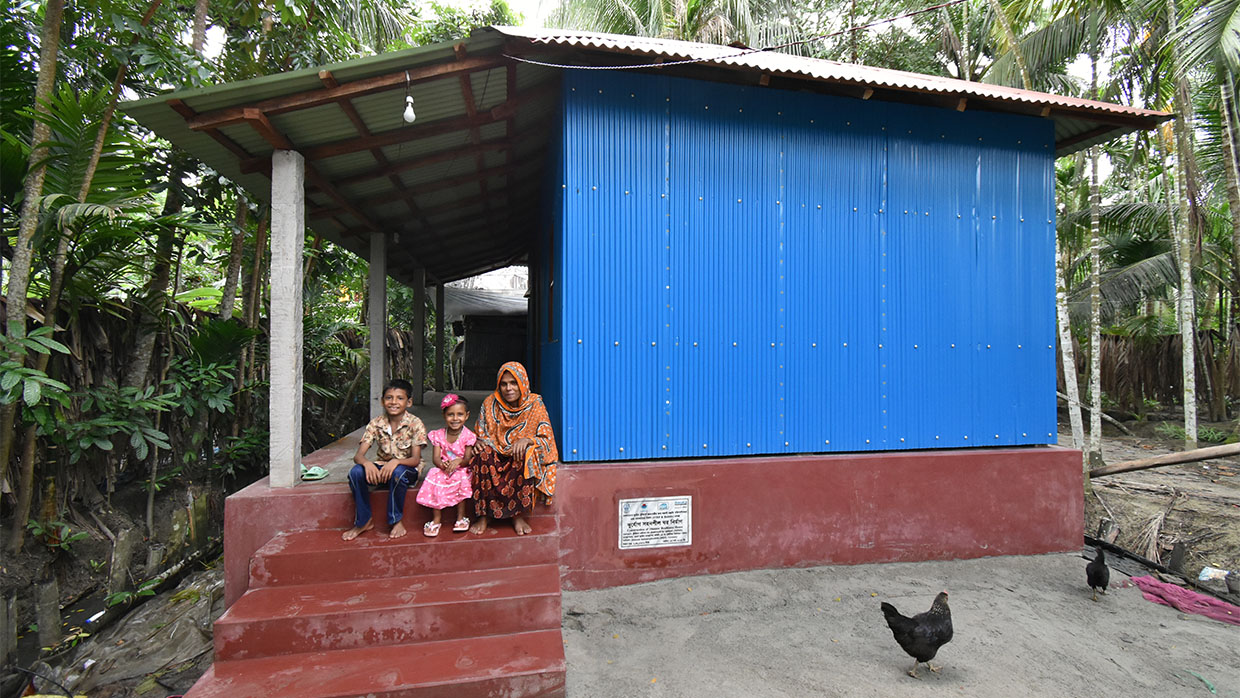
A number of construction works have also been completed across all implementing locations during this reporting period. CCDB and partner organizations constructed six resilient houses and forty-one toilets to mitigate disaster risks at the community level. The project installed five tube wells in the Haor area to address the scarcity of safe drinking water.