
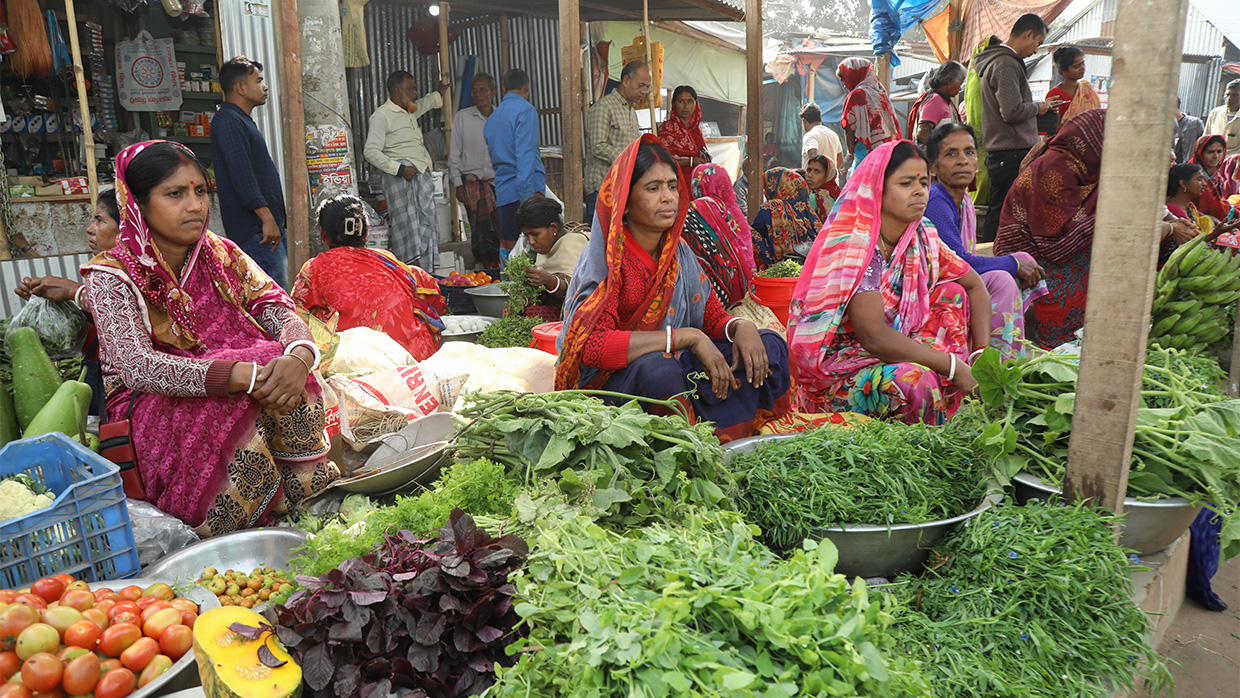
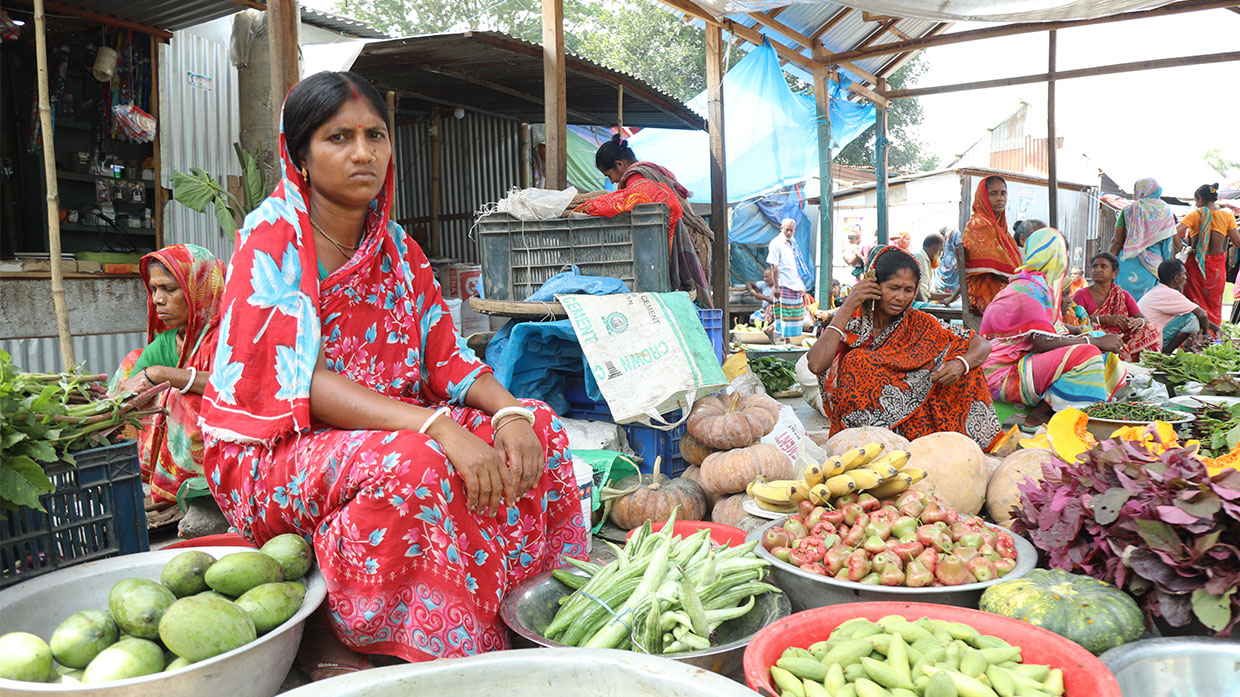
The Strengthening Livelihoods of Poor Farmers through Inclusive Value Chain Development (SLVFIVCD) project, funded by Transform Aid International (TAI) and Australian Aid, runs from July 2022 to June 2025. Its goal is to improve the socio-economic conditions of vulnerable women and men by reducing unequal power relations and creating economic opportunities through strengthening key value chains.
The project has made significant strides in supporting local producers. A total of 24 producer groups, comprising 500 individuals, have been actively working together, making plans, and assisting each other according to their needs. Capacity-building training has been provided to 250 producers, with a focus on vegetable value chains (150 producers), dairy (100 producers), and duck value chains (60 producers).
Additionally, producers have received training in natural resource management practices, such as vermicompost preparation (200 producers), the use of biochar (100 producers), and disaster risk reduction (DRR) and climate change (200 producers). This training has led to a shift in focus towards quality production, with producers applying modern farming techniques and environment-friendly practices, such as using vermicompost and biochar to improve product quality and achieve higher market prices.
The project has introduced the Macha technique to 250 producers, which enables year-round vegetable production, even in inundated land. Producers have also been trained in market system development to better understand the market dynamics. New value chains for dairy and duck farming were introduced this year, including the introduction of the Jinding variety of egg-laying ducks. The project has trained youth as vaccinators for both dairy and duck farms, and two livestock officials have been added to support vaccination campaigns.
Four aggregation centers were established this year, allowing producers to attract wholesalers to their villages, resulting in increased income. Additionally, three women-friendly sell corners were set up in local markets, offering women producers a more comfortable selling environment. The project also established two modern nurseries, where new farming techniques were introduced to produce and sell seedlings locally.
The project has strengthened its relationship with key market actors, including input providers, local government officials, market committees, wholesalers, traders, and agricultural and livestock extension officers. These connections have greatly benefited the producers. Furthermore, the project has developed functional relationships with local administrations and relevant government departments, such as the Department of Agricultural Extension, the Department of Livestock Services, and the Department of Agricultural Marketing. Input support and cash distributions for vegetable production, livestock rearing, and the use of biochar stoves were carried out in collaboration with government officials and local representatives, with coverage in both electronic and print media.