
Improving Food Security and Reducing CO2 through Biochar
Bangladesh, an agriculture-dependent country, faces land degradation challenges due to overuse of groundwater, chemical fertilizers, and pesticides. To address these, CCDB has introduced biochar technology to combat the effects of climate change, such as flooding, droughts, and salinity, particularly affecting marginalized groups.
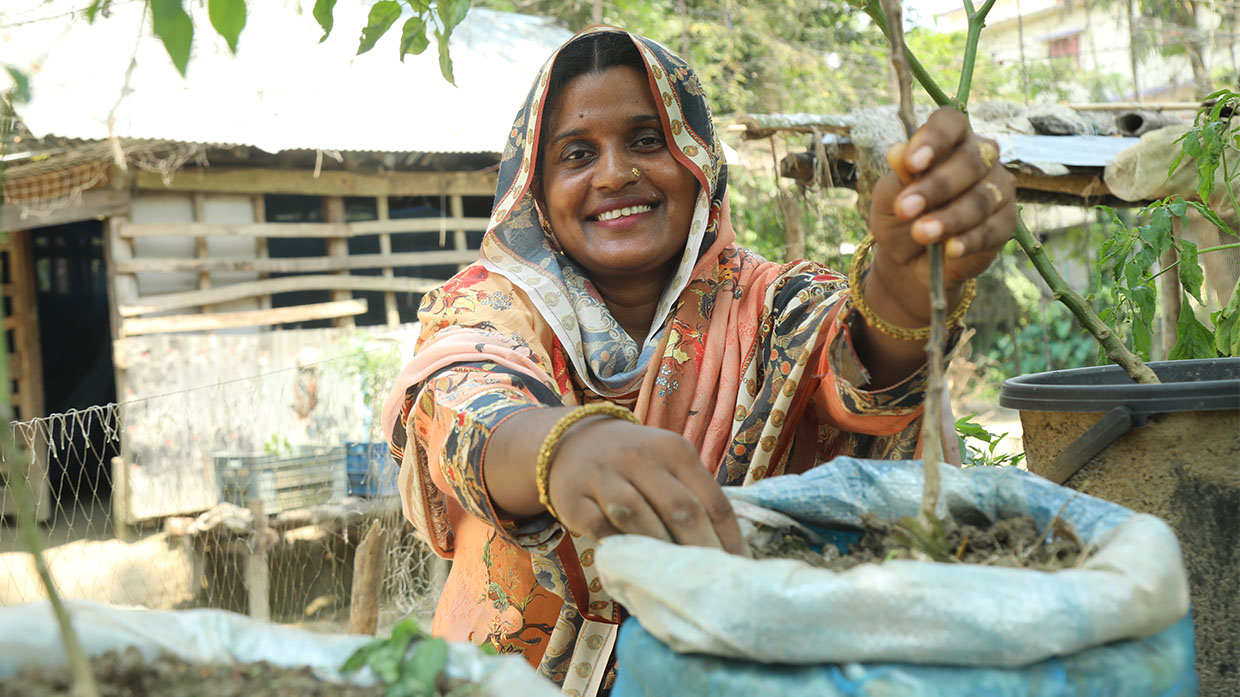
With funding from Kerk In Actie, CCDB is working in Shibalaya, Manikgonj, and Manda, Naogaon to support 4,200 farmers in improving food security through biochar. Biochar, made from organic materials via pyrolysis, helps sequester carbon, reduces greenhouse gas emissions, improves soil fertility, and reduces the need for irrigation.
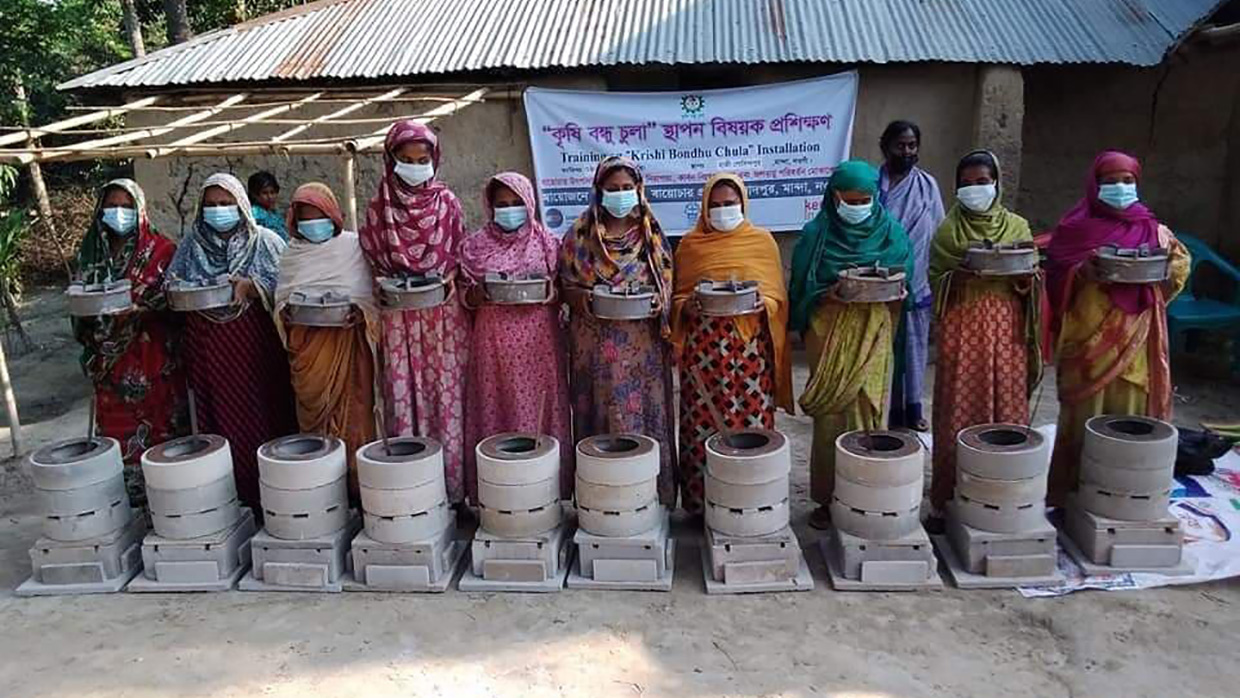
CCDB’s Krishi Bondhu Chula (KBC), a biochar-producing cookstove, not only saves fuel but also produces biochar while cooking, thus reducing CO2 emissions. The project has distributed 200 additional stoves, complementing 500 stoves previously distributed.
The project is in the process of obtaining a license for commercialization of Biochar Enriched Organic Fertilizer. It has set up 319 demonstration plots and sensitized 53 fertilizer dealers to biochar’s commercialization. Biochar demand is growing, and the project is collaborating with government agencies, private companies, and researchers.
As biochar demand increases, the project is fostering Biochar Enterprise groups to sustain the business and provide alternative livelihoods for stove users. Government agencies and private companies are exploring biochar’s potential for improving soil health, particularly in sugarcane production.
The project contributes to the Paris Agreement’s climate goals and aligns with carbon credit methodologies for sustainable financing.